
Case Study: From 0 to 300%+ Sales Growth Through Technical Transformation
A deep dive into the technical decisions, architecture changes, and UX optimizations that drove a 300%+ sales increase for a high-traffic retail platform.
The Business Reality: When Tech Debt Kills Growth
When I was brought in to audit this high-traffic retail platform, the business was hitting a revenue ceiling. It wasn't a marketing problem—it was a deep-rooted engineering problem.
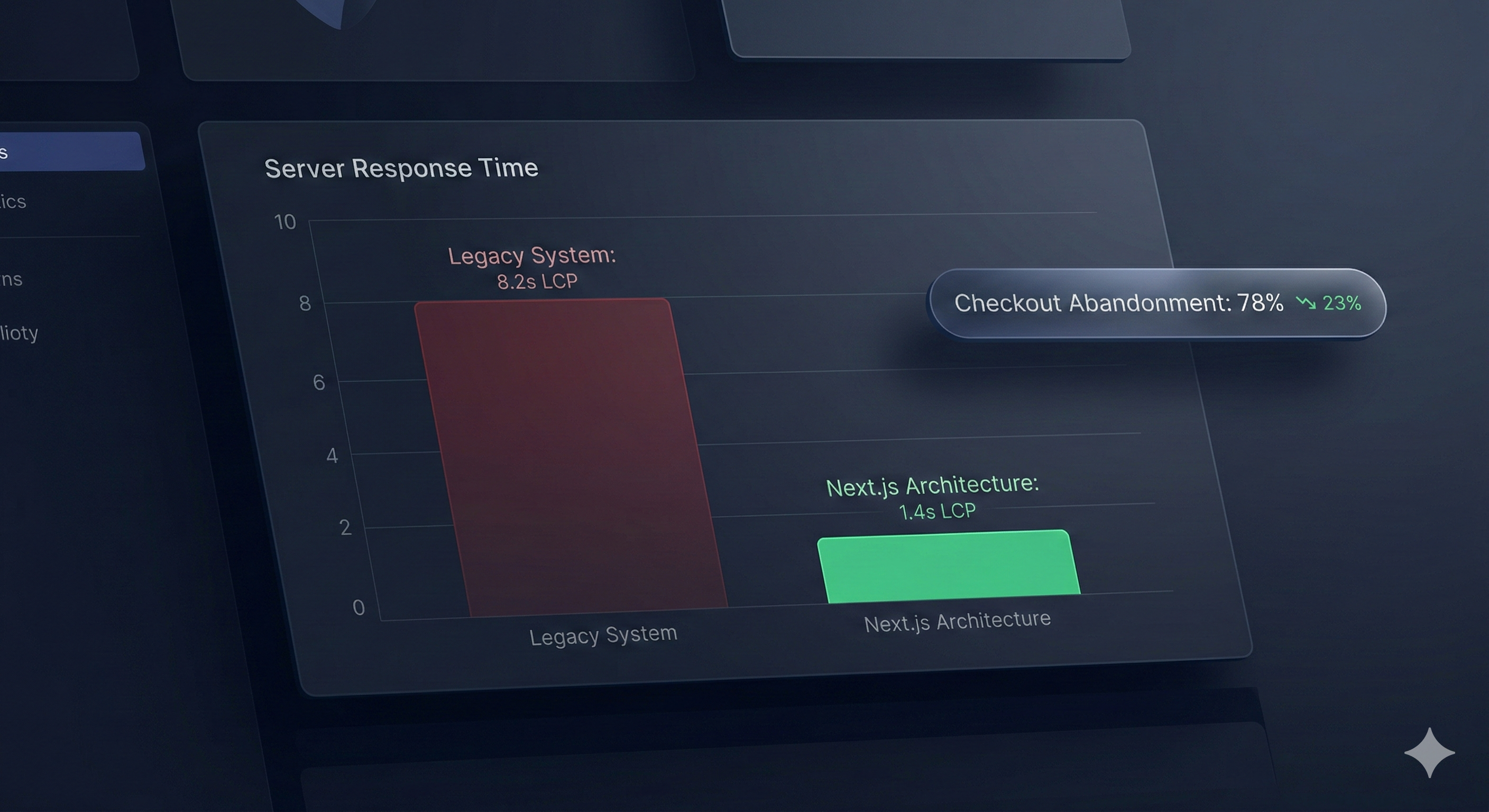
Page load times were consistently exceeding 8 seconds. The mobile user experience was disjointed, leading to a crippling 78% checkout abandonment rate. The legacy monolithic architecture was so fragile that launching new marketing campaigns resulted in server crashes rather than sales spikes.
Scaling was mathematically impossible without a foundational rewrite.
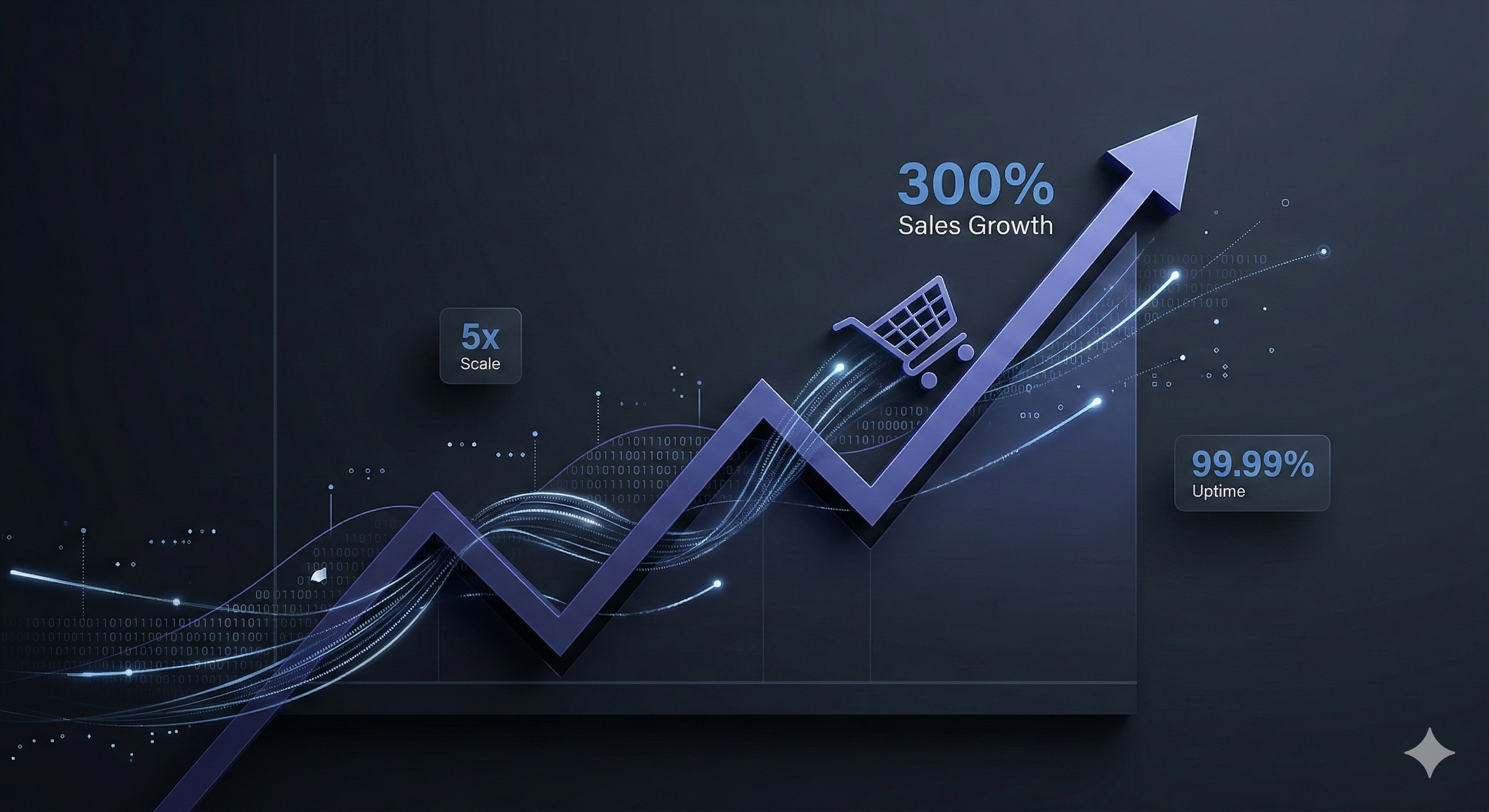
This is the technical blueprint of how we architected a complete turnaround—transforming a legacy bottleneck into a high-performance conversion engine that delivered 300%+ direct sales growth, 5x user scaling capacity, and flawless 99.9% uptime in under a year.
The Challenge: Diagnosing the Bottlenecks
A full-stack audit revealed three critical failure points:
- Frontend Bloat: A heavy, client-side rendered SPA that punished mobile users with terrible Core Web Vitals.
- Backend Fragility: A monolithic API architecture with unoptimized database queries causing systemic latency.
- UX Friction: A clunky, multi-page checkout flow that actively deterred buyers.
The mandate was clear: rebuild the plane while it was flying, with zero acceptable downtime for actual customers.
Step 1: Performance as a Revenue Driver
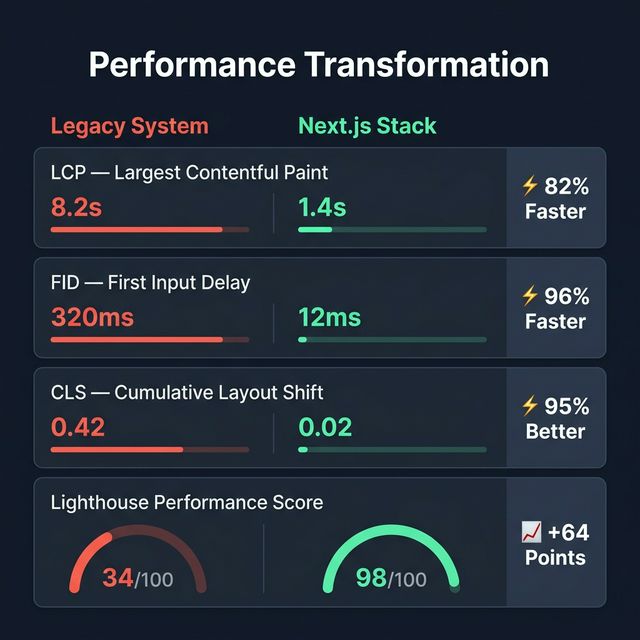
In e-commerce, milliseconds equal millions. Google's Core Web Vitals aren't just SEO vanity metrics; they directly correlate to human bounce rates.
The Technical Execution
We ripped out the legacy frontend and migrated the entire presentation layer to Next.js.
- Server-Side Rendering (SSR) & Static Site Generation (SSG): Critical product pages were statically generated at build times, delivering HTML to the browser instantly.
- Intelligent Asset Delivery: We implemented automated WebP/AVIF image optimization with native lazy-loading, slashing the average image payload by 85%.
- Edge Caching: We deployed Cloudflare's global CDN to cache static assets geographically closer to the end-users.
The Impact
The results were immediate and staggering. By pleasing the Google crawler, organic traffic spiked. By pleasing the user, bounce rates plummeted.
Step 2: System Architecture & Zero-Downtime Reliability
To handle the anticipated rush of holiday traffic, the backend needed a modern, decoupled architecture.
The Engineering Stack
We transitioned to a scalable microservices-inspired architecture built for resilience:
- Core API: Rebuilt using Java Spring Boot, providing enterprise-grade security and multithreading capabilities for complex order processing.
- Data Layer: Migrated to PostgreSQL, heavily indexing high-read tables and introducing Redis as an in-memory caching layer for pricing and inventory data to prevent database locking.
- Containerization: Everything was containerized using Docker and orchestrated via Kubernetes, allowing individual services to auto-scale horizontally based on CPU load.
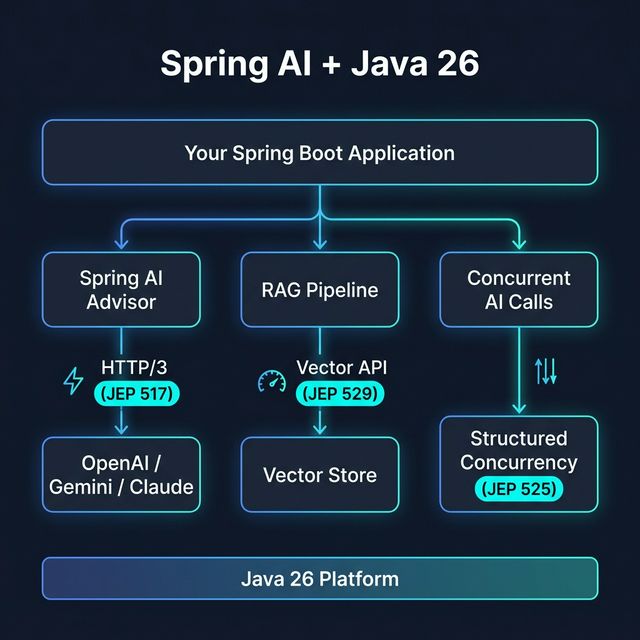
By implementing strict CI/CD pipelines via GitHub Actions, we achieved true zero-downtime deployments. We could patch bugs and deploy new features at 2:00 PM on a Tuesday without a single customer noticing a dropped connection.
Step 3: The AI Multiplier
With a rock-solid, lightning-fast foundation in place, we introduced AI to personalize the shopping experience at scale.
- Semantic Search & Recommendations: We integrated the OpenAI API to generate text embeddings for the entire product catalog, storing them in PostgreSQL using the
pgvectorextension. This allowed customers to search using natural language (e.g., "warm jackets for hiking in the rain") rather than exact keyword matches, drastically improving search conversion rates. - Automated Customer Support: We deployed an intelligent, context-aware chatbot trained on the company's return policies and product specs, instantly resolving over 70% of tier-1 support tickets without human intervention.

The Master ROI: 300% Growth
Technology for technology's sake is a waste of capital. Every line of code written during this transformation was designed to move the needle on business KPIs.
After 10 months of execution, the metrics spoke for themselves:
- 🚀 300%+ Direct Sales Growth: Driven by a buttery-smooth UX, instant page loads, and AI-powered upselling.
- 🛒 Checkout Abandonment Crushed: Dropped from 78% to just 23% by implementing a frictionless, single-page React checkout flow.
- 📈 5x User Scaling: The platform successfully absorbed Black Friday traffic volumes without a single latency spike or server crash.
- 🛡️ 99.9% Uptime: Monitored 24/7 via Grafana and Prometheus automated alerting.
Are Your Systems Holding Your Growth Hostage?
If your platform is suffering from sluggish load times, high checkout abandonment, or an architecture that crashes during peak events—your technology is costing you active revenue.
You don't just need a developer; you need a strategic engineering partner who understands how systems architecture directly translates to sales growth.
Ready to stop leaving money on the table? Let's discuss how we can modernize your stack and unleash your platform's actual potential.
Want to discuss this further or work together?